Osgood-Schlatter Disease: A Modern Approach to Knee Pain in Growing Athletes
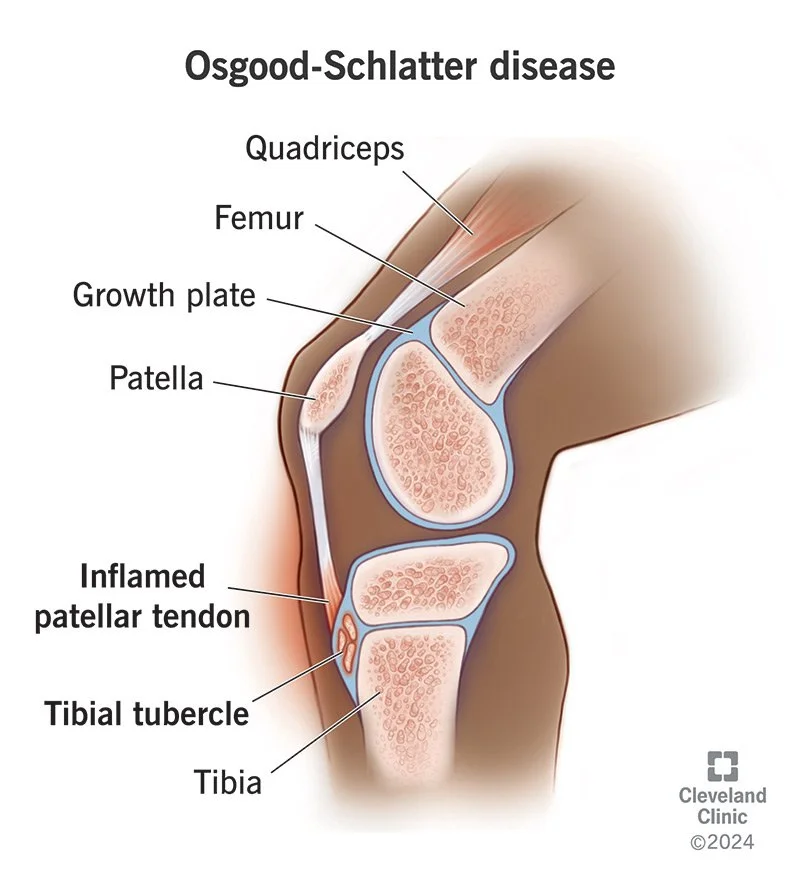
Image 1: Osgood-Schlatter Disease
Understanding Knee Pain in Youth Athletes
If your child is active in sports and starts complaining of pain just below the kneecap, especially during running or jumping, Osgood-Schlatter disease is a common cause.
It typically occurs during growth spurts and/or times of increased activity, training, or load and presents as:
• Pain at the front of the knee
• Tenderness at the tibial tuberosity
• Increased symptoms with activity
What Is Osgood-Schlatter?
Osgood-Schlatter is best described as a load-related irritation of a growth area at the front of the knee, specifically where the patellar tendon attaches to the tibial tubercle.
During growth:
• Bones are developing and more sensitive to stress
• The quadriceps muscle pulls on the patellar tendon
• The patellar tendon pulls on its attachment site at the tibial tubercle
With repetitive activities like running and jumping, this pulling creates a stress reaction at the attachment site.
As a response, the body begins to lay down new bone in that area to help manage the stress. This contributes to:
• The noticeable bump below the knee
• Local tenderness and sensitivity
• Pain with activity or direct pressure
It can be helpful to think of this like how your skin forms a callus. When there is repeated stress or friction, the body builds up extra tissue to protect the area. In Osgood-Schlatter, the body is doing something similar by laying down bone at the tendon attachment.
This is not a tear or a dangerous injury. It is the body adapting to repeated load during a period of growth.
Why It Happens
Current research points to:
• Rapid growth and changing body mechanics
• High activity levels (running, jumping, cutting sports)
• Limited load tolerance at the knee
This is not just a flexibility issue. It is a load and capacity problem.
The Modern Approach to Treatment
The goal is not to stop activity completely. The goal is to guide it appropriately.
Key principles:
• Modify load, not eliminate it
• Manage soft tissue irritability
• Build strength and control
• Gradually reintroduce higher-level activity
The Role of Physical Therapy
Physical therapy helps:
• Reduce irritation
• Maintain strength
• Progress activity safely
• Improve movement mechanics
Manual therapy such as soft tissue work, cupping, or IASTM may help reduce discomfort, but long-term improvement comes from progressive loading.
Rehab Phases
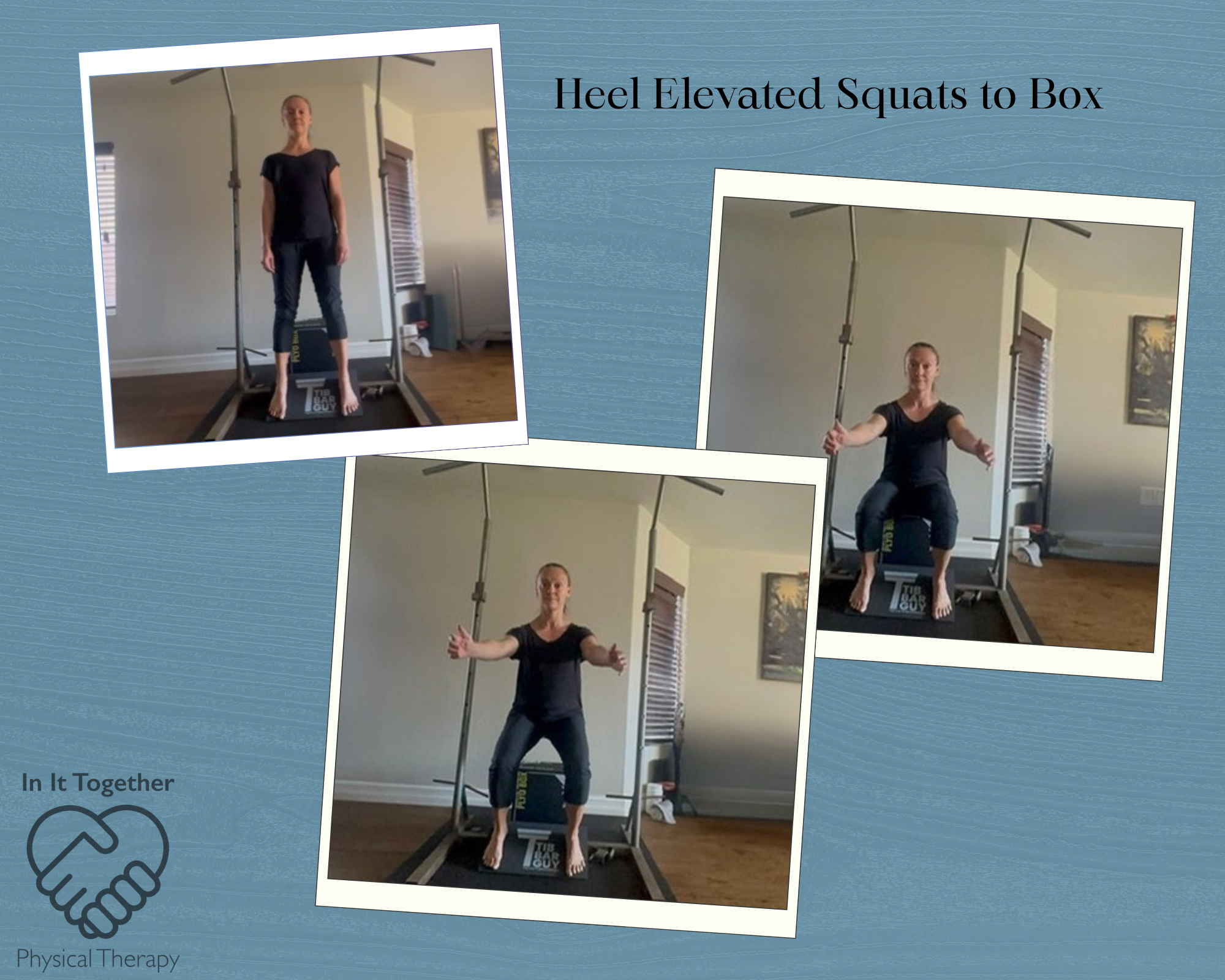
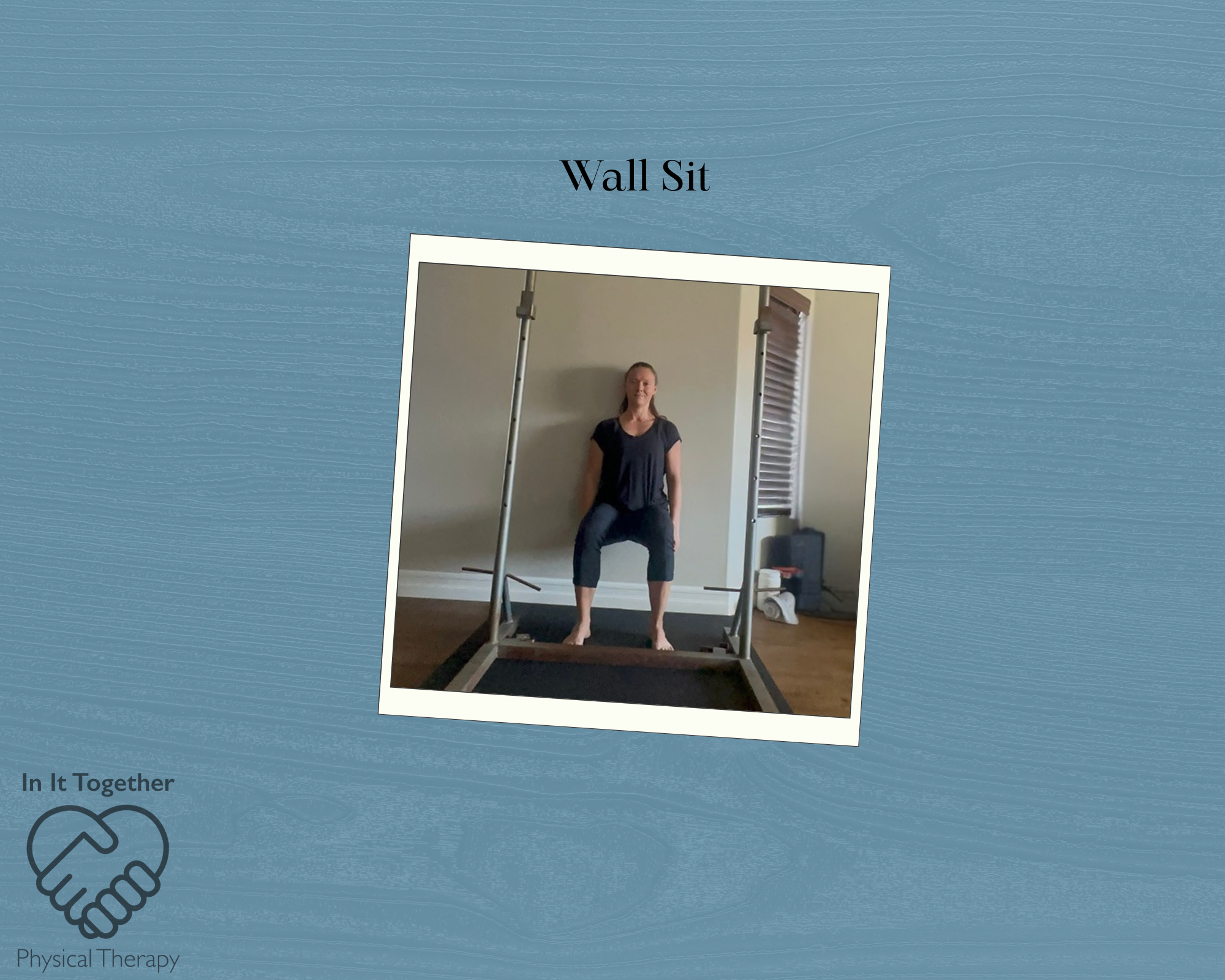
Phase 1: Calm Symptoms, Maintain Activation
Focus: Reduce pain while keeping the system active and coordinated
• Heel Elevated Mini Squats (box squat)
• Wall Sit
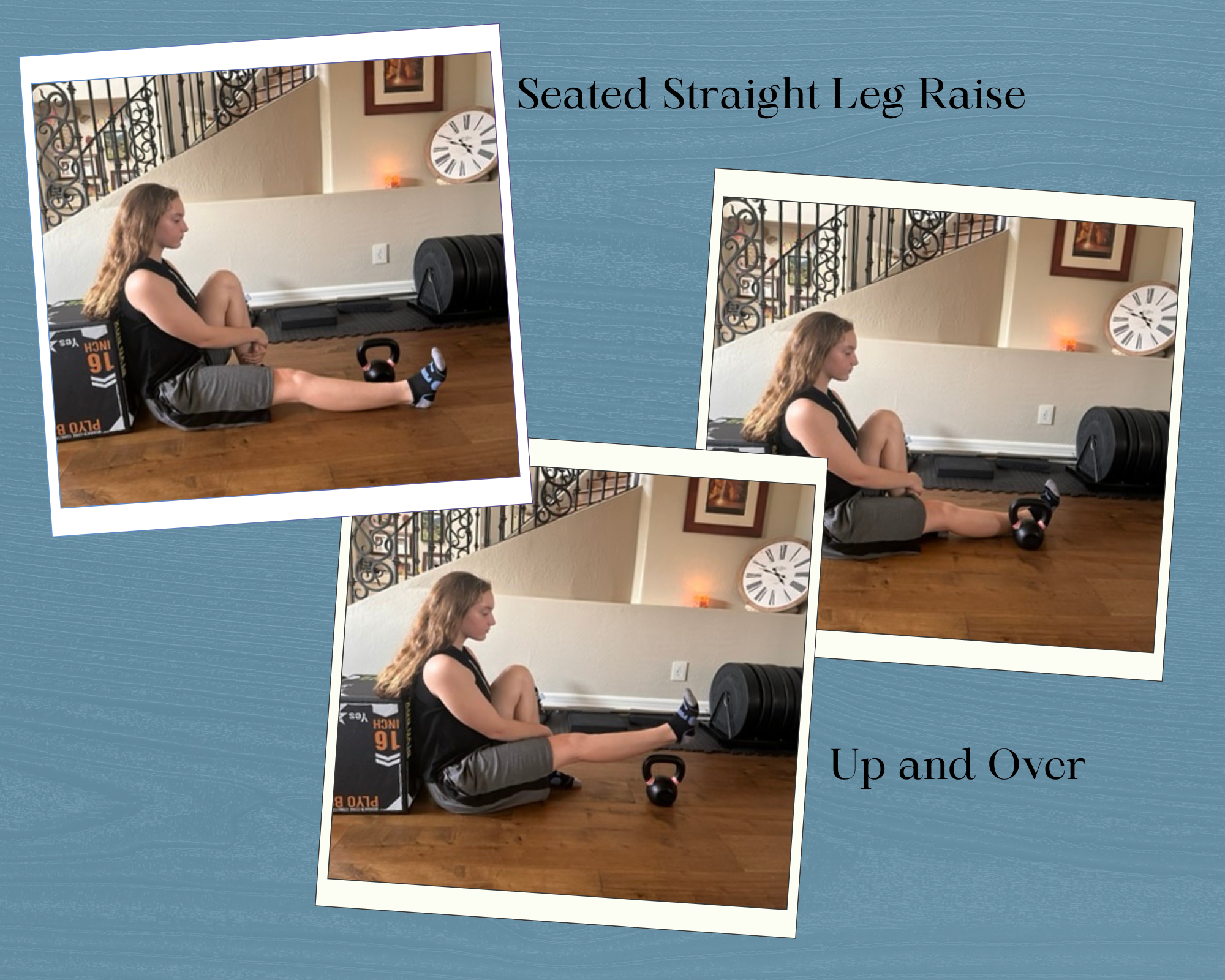
• Seated Straight Leg Raise Over Object
• Ankle 3-way Mobilization
Phase 2: Build Strength and Control
Focus: Restore strength, control, and tolerance to deeper ranges
• Step-Downs (Eccentric Control)
• Rear-Foot Elevated Split Squats
• Single-Leg Squat to Box with Reach
• Tempo Goblet Squats
Phase 3: Return to Sport and Performance
Focus: Develop power, deceleration, and sport readiness
• Box Jumps with Controlled Landing
• Broad Jumps with Stick Landing
• Single-Leg Hop Series (Forward and Lateral)
• Drop Jumps (Intro to Reactive Loading)
Key Takeaways
• This condition is common and manageable
• It is related to growth and load, not damage
• Staying active is important
• Strength and progression drive recovery
When to Seek Help
If your child’s pain is:
• Limiting participation
• Not improving
• Or getting worse
Guided physical therapy can help them stay active while building strength safely.
Closing
At In It Together Physical Therapy, we help young athletes stay active while building strength and confidence through each stage of recovery.