April Is Stress Awareness Month
How Stress Affects Your Body and Movement
April is National Stress Awareness Month, a great time to step back and look at how stress impacts not just our mind, but our body as well.
Stress is more than a feeling. It creates real physical changes. When stress levels are high, the body shifts into a more protective state. Muscles tend to tighten, breathing becomes more shallow, and the nervous system stays on high alert. Over time, this can lead to increased pain, decreased mobility, and reduced performance in daily activities or exercise.
Many people notice more tension in the neck, shoulders, and back during periods of stress. Others feel more fatigue, slower recovery, or a drop in strength and coordination. Stress can also amplify symptoms in areas that are already sensitive, so an old injury or a nagging spot may feel more painful during high-stress periods. This is not just coincidence. The nervous system plays a key role in how we experience pain and how well our body moves and recovers, and when it is on high alert, it can increase the intensity of pain signals.
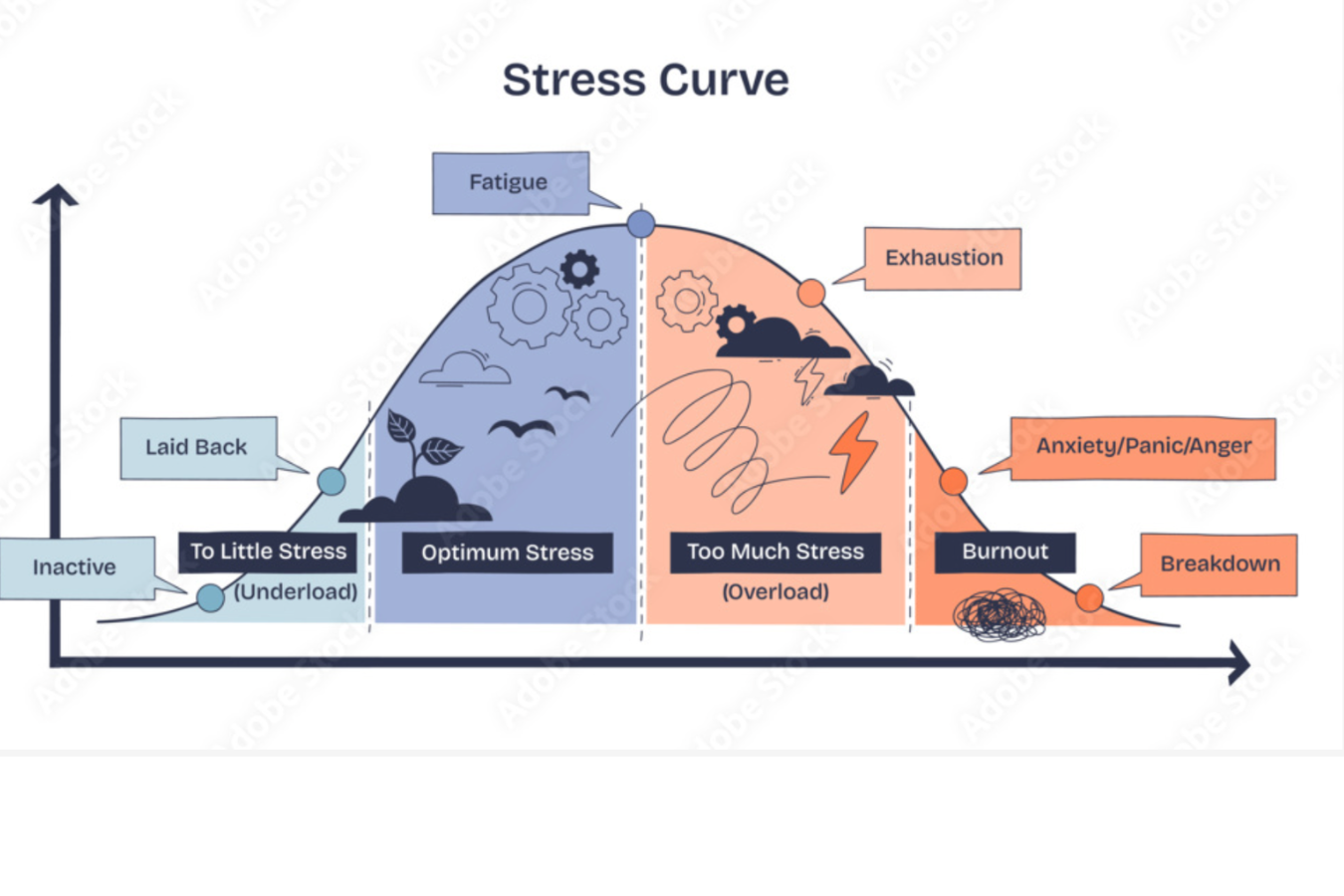
Stress can be helpful to our bodies,but when it exceeds our capacity we see a cascade of negative effects.
Stress, Pain, and Performance
When the body is under constant stress, it can become more sensitive to pain. Movements that once felt easy may start to feel uncomfortable or restricted. At the same time, performance can decline because the body is not operating in an efficient, well-regulated state.
This does not mean something is damaged. It often means the system is overloaded.
Movement as a Tool for Stress Management
One of the most effective ways to help regulate stress is through movement. Strength training, walking, mobility work, and even simple breathing-based exercises can help shift the nervous system out of that high-alert state.
Movement improves circulation, supports recovery, and helps the body process stress more effectively. It also builds confidence and resilience, both physically and mentally.
The key is choosing the right type and intensity of movement for where your body is right now.
Additional Support for Nervous System Regulation
In some cases, movement alone is not enough to fully calm the system. That is where additional tools can help.
At In It Together Physical Therapy, we offer services that support nervous system regulation, including vagus nerve stimulation, red light therapy, and LENS neurofeedback. These approaches can help reduce stress, improve recovery, and create a better foundation for movement and healing.
Bringing It All Together
Stress is a normal part of life, but when it builds up, it can affect how your body feels and performs. The good news is that there are ways to support your system.
Movement, strength, and the right therapeutic tools can help you feel more balanced, reduce pain, and move with greater confidence.
If you are feeling the effects of stress in your body, in-home physical therapy can help you reset, recover, and move forward.